Many Nigerians still approach insurance with suspicion. The common story is that an insurer is friendly…
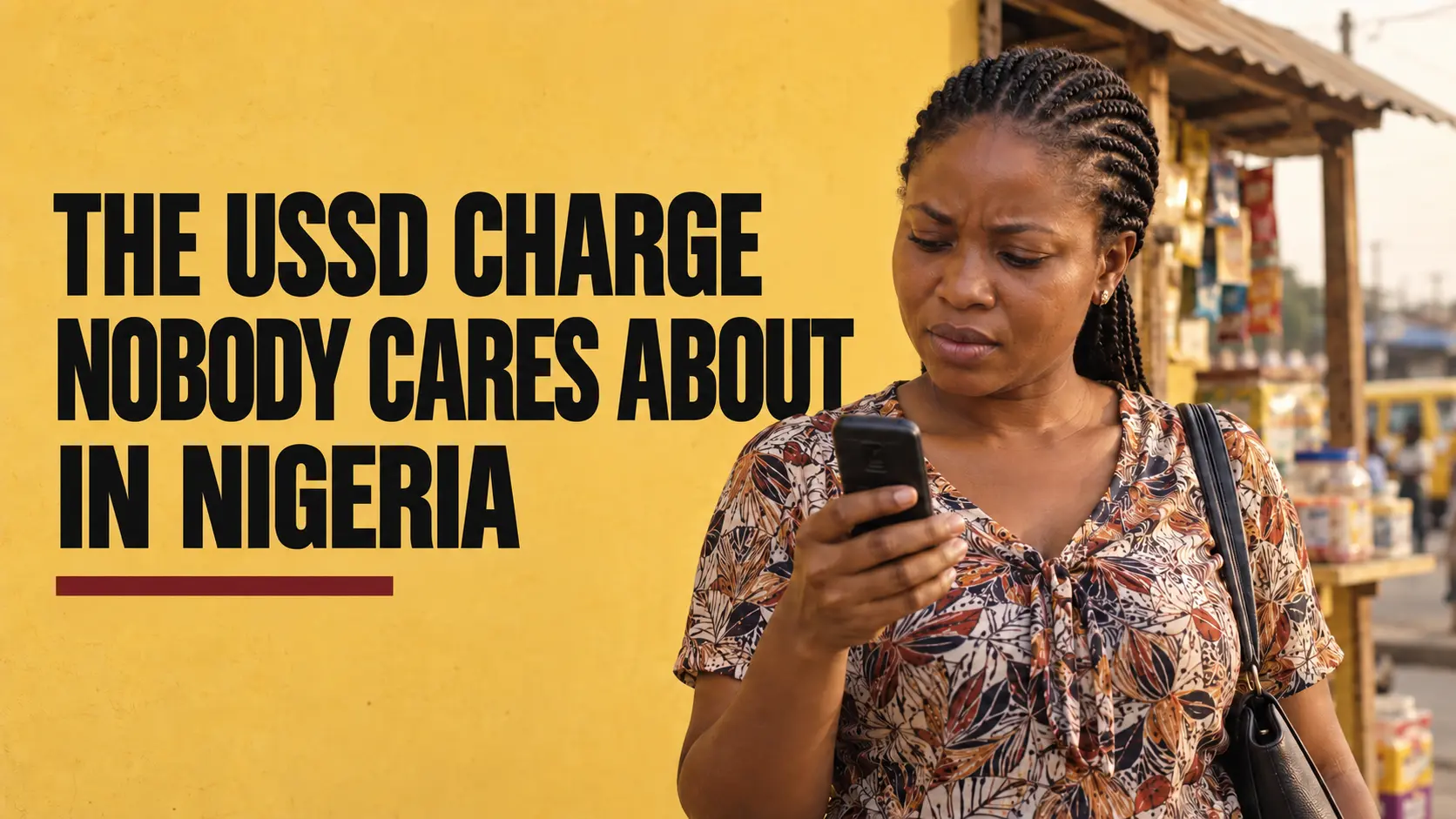
The USSD Charge Nobody Cares About in Nigeria
Most Nigerians do not pay attention to the first message that appears after dialling a bank’s USSD code. We see the menu, press the next number and try to complete the transaction before the session expires. If the message says that a small charge will be deducted from our airtime, we accept it without giving the cost much thought. The amount is usually ₦6.98, which looks too small to deserve serious attention. It cannot buy a bottle of water in most places, so many people treat it as loose change. That is exactly why the charge is easy to ignore even when it is deducted several times in one week. Yet this small fee explains why your airtime sometimes reduces after checking your balance, transferring money or paying a bill through a bank’s short code.
USSD means Unstructured Supplementary Service Data, but most Nigerians simply know it as the code that starts with an asterisk and ends with the hash sign. It allows a phone to communicate with a bank or another service provider without using mobile data. The service works on smartphones and basic phones, which makes it important in a country where reliable internet access is not available to everyone. When a banking app refuses to open, a data subscription expires or the network becomes too weak for internet banking, USSD is often the next option. Traders use it to confirm balances, parents use it to send money to children at school, and workers use it to buy airtime or pay electricity bills. Its value comes from being simple, widely available and usable without an internet connection.
The service feels simple to the customer, but several companies are involved in making it work. Your bank operates the financial platform, while your mobile network carries the request between your phone and the bank. A technology provider may also help connect the bank’s system to the mobile network. These companies incur costs for the infrastructure and support required to keep the channel running. The ₦6.98 fee is mainly connected to the use of that communication channel. It is not the amount being transferred, and it is not automatically the same as the bank’s transfer fee.
For years, the way the USSD charge was collected caused disagreements between Nigerian banks and mobile network operators. Under the earlier arrangement, banks deducted the fee from customers’ accounts and were expected to pay the network operators. Problems later arose over billing records, reconciliation and unpaid USSD debts. The current arrangement is known as End User Billing, and it moves the charge from the customer’s bank account to the customer’s airtime. Under this model, the mobile network deducts the USSD charge directly after the customer agrees to use the service. The bank should stop deducting the same USSD fee from the customer’s account after moving that customer to End User Billing.
According to the Nigerian Communications Commission’s information on End User Billing, a banking USSD session costs ₦6.98 and can last for up to 120 seconds. The network is expected to obtain the customer’s consent before deducting the charge. It should also send an end-of-activity message showing what the customer was charged. The price is intended to be clear before the customer proceeds, even though many people press the confirmation option without reading it. The arrangement also gives a customer the choice to stop using the USSD channel if the person does not want to pay through airtime. In practice, however, a person facing an urgent payment may feel that there is no real alternative at that moment.
The move to airtime billing does not necessarily happen at the same time for every bank. Each bank, mobile network and technical partner must complete the required integration, testing and agreements before customers are moved. A bank is expected to inform its customers before the new billing arrangement begins. There is also room for a bank and network operator to agree that the bank will cover the USSD cost for its customers. In that case, the bank’s code may remain free to the customer under an approved corporate billing arrangement. This is why two people using different banks may have different experiences even when they are on the same mobile network.
The ₦6.98 charge is often confused with the fee for transferring money, but they are separate costs. If you send money to another bank, your bank may apply the relevant electronic transfer charge. Depending on the amount and type of payment, another levy or service charge may also apply. The USSD fee is the cost of accessing the banking service through the mobile network. You may therefore notice a transfer fee in your bank account and a separate ₦6.98 deduction from your airtime. Seeing both deductions does not automatically mean that you have been charged twice for the same service.
The difference becomes clearer when two people make similar transfers through different channels. One person may send ₦10,000 through a banking app, while another person sends the same amount through USSD. Both customers may pay the bank’s applicable transfer fee, but only the USSD user may pay the additional ₦6.98 channel charge. The app user still pays for mobile data, although the cost of one transaction may be difficult to separate from an existing data bundle. This does not always make the app cheaper because data prices and bank charges also matter. It simply means that the cost of the channel should be considered when deciding how to make routine payments.
A more surprising problem is that you can have money in your bank account and still be unable to use USSD banking because your airtime is too low. The balance in your bank account does not replace the airtime required to open the banking session. This can become a serious inconvenience when your banking app is unavailable and you need to make an urgent payment. Some Nigerian banks already tell customers to confirm that they have enough airtime when their USSD service is not working. For example, Stanbic IBTC tells customers to check that they have at least ₦6.98 in airtime. A person can therefore have ₦200,000 in the bank and still be temporarily unable to reach the money through USSD.
The official rate deserves attention because it explains how the ₦6.98 figure was reached. The NCC’s determination on USSD pricing sets a 20-second session price of ₦1.63 for general USSD services, subject to the applicable rules. Banking and financial transactions are treated differently because they are allowed to last for up to 120 seconds. Instead of charging ₦9.78 for six separate periods of 20 seconds, the banking session remains priced at ₦6.98. The regulator therefore presents the banking rate as a reduced price for a session that can run for up to two minutes. This does not mean that one payment gives you unlimited access for the rest of the day.
Once a session ends, expires or is closed, dialling the bank’s code again begins another interaction. If the new session meets the conditions for billing, another ₦6.98 can be deducted. This is where the amount begins to matter, even though one charge still looks insignificant. If you use a bank’s USSD service five times each week and every use attracts the fee, you will spend about ₦1,814.80 in one year. A person who completes one chargeable session every day will spend about ₦2,547.70 in a year. These figures exclude transfer fees, account charges, data subscriptions and every other cost of managing money.
The cost can be higher for a small trader who uses USSD several times during the working day. The trader may use separate sessions to pay suppliers, confirm balances, buy airtime and send money to family members. If ten chargeable sessions are completed on each of 300 working days, the annual USSD cost will be ₦20,940. That amount may not look large beside the trader’s annual turnover, but it is still money leaving the business without buying stock or increasing profit. The charge becomes more noticeable when it is added to bank transfer fees, POS charges and the cost of mobile airtime. Small deductions are easy to ignore individually because they rarely arrive as one large bill.
A fixed charge also affects small transactions more heavily than large ones. A ₦6.98 charge on a ₦1,000 transfer is equal to almost 0.7 percent of the amount being sent. On a ₦100,000 transfer, the same charge is less than 0.01 percent of the transfer amount. The network carries a banking session in both cases, but the financial effect on the two customers is not equal. Someone sending money for transport or food can feel the fee more than someone making a large business payment. This is one reason small financial charges can place more pressure on low-income customers.
USSD remains necessary for many Nigerians despite its cost. A market trader may not want to bring out an expensive smartphone in a crowded market. An elderly customer may find a short code easier to use than a banking application with several menus. A farmer in an area with weak internet service may have enough phone signal for USSD but not enough data connectivity for an app. A person using a basic phone does not have the option of installing a banking application. Any discussion about the fee should therefore recognise that USSD is an essential banking channel for people who have limited alternatives.
The charge does not guarantee that the financial transaction will succeed. It pays for access to the USSD channel under the approved billing arrangement. A transfer can still fail because of a network problem, an unavailable bank platform, an incorrect account number, an expired session or insufficient funds. This can leave the customer wondering why airtime reduced when no money reached the intended beneficiary. The NCC’s rules include protections intended to prevent charging when specified network or system errors occur. However, customers may still encounter situations where the cause of a deduction is not immediately clear.
When a session ends without a clear confirmation, do not keep redialling the code immediately. First check your bank balance, transaction history and SMS alerts to confirm whether the payment went through. A delayed confirmation can make a successful transfer look like a failed one for several minutes. Repeating the transaction may create a duplicate payment if the first attempt was successful. Opening several fresh USSD sessions can also lead to several separate charges. Waiting briefly and checking your records may therefore save both the transfer amount and the additional service fees.
Keep the end-of-session message from your mobile network whenever one appears. You should also note the time, bank code, amount, phone number and transaction reference connected to the disputed activity. These details make it easier for the bank or mobile network to investigate what happened. If the problem concerns access to the USSD platform, the NCC advises customers to contact the mobile network. If the session opened but the banking transaction failed, the customer should contact the bank. When the complaint remains unresolved, the NCC’s official USSD page provides regulatory complaint contacts, including its toll-free line.
Customers should also watch for double billing under the new arrangement. Once a customer has been moved to End User Billing, the network may deduct the ₦6.98 from airtime, but the bank should not deduct another USSD fee from the bank account for the same use. This does not mean every deduction from the bank account is a duplicate charge. A transfer fee, bill-payment fee or statutory levy is different from the network’s USSD fee. What you should look for is a bank account entry specifically described as a USSD charge after your airtime has already been charged for that session. If that happens, save the airtime message and account record before filing a complaint.
Bank USSD services should also be separated from a mobile network’s own customer service codes. The NCC determination says that currently free network services, such as checking airtime balance or buying airtime and data through the network’s own code, should remain free. Using your bank’s code to buy airtime is a different activity because the bank is debiting your account to complete a financial transaction. That banking session may attract the ₦6.98 charge after the bank and network move the service to End User Billing. The fact that you are buying airtime does not automatically make the bank’s USSD session free. The message displayed before the transaction should tell you whether the charge applies.
The consent message is therefore more important than it looks. It is meant to tell you that your airtime will be deducted and give you the choice to continue or cancel. Most people ignore it because they are in a hurry, the session has a time limit and the amount looks insignificant. We are often more concerned about entering the correct account number before the screen disappears. Still, reading the message can prevent confusion when airtime reduces later. Those few seconds also give you a chance to decide whether another banking channel would be more suitable.
If the transaction is not urgent and you already have reliable mobile data, a banking app may be a better option for repeated payments. If you need to send money to several people, completing the payments through one app session may be more convenient than opening several USSD sessions. This does not mean an app is free because it uses data and may still attract the bank’s normal transfer charges. It means you should compare the available channels instead of using USSD automatically for every task. USSD can then remain an emergency or backup option when the app is unavailable. Choosing the channel deliberately is better than discovering the cost after several deductions.
Preparation can also reduce unnecessary USSD sessions. Have the correct account number, amount and bank name ready before dialling the code. Read the beneficiary’s name carefully before entering your PIN, and do not proceed if the details look wrong. Avoid opening the code when the network is clearly unstable because the session may expire before you finish. If an attempt appears to fail, confirm the result before trying again. A little care can prevent an extra ₦6.98 charge, but more importantly, it can prevent an incorrect or duplicate transfer.
The USSD charge has nothing to do with the security of your PIN, and nobody needs your secret banking details to reverse it. A fraudster may claim to be calling from your bank or mobile network after you complain about a deduction. The person may ask for your USSD PIN, debit card PIN or one-time password to process a refund. A genuine bank or network employee should not require these secret codes to investigate a service fee. Use only the official contact details published by your bank, the NCC or your mobile network. The loss from sharing a PIN can be far greater than every USSD charge you will pay in one year.
The wider issue is that small charges are easy to ignore. Most people notice a ₦5,000 debit immediately, but ₦6.98 can disappear without a question. The fee then joins the cost of mobile data, transfer charges, debit alerts, card maintenance, POS use and transport to a bank or ATM. Each cost may look minor when considered alone, but they can take a noticeable part of a low-income customer’s money when combined. The answer is not to fear every financial charge or abandon a useful service. The sensible response is to understand what the charge pays for and use the service when it provides enough value.
I keep a small amount of usable airtime for emergencies even when I have an active data plan. A banking app can fail at the exact moment money needs to move, and USSD provides another route to the account. The ₦6.98 is easier to accept when it helps complete an urgent payment and harder to justify when it is spent on repeated balance checks that could have been done another way. Before approving a session, remember that the money normally comes from your airtime under End User Billing. Remember also that it is separate from the amount being transferred and may be separate from the bank’s transaction charge. In a country where every naira has a job, even ₦6.98 deserves attention before it is spent.
More to Explore


Comments (0)